
Every year, somewhere around late October and November, the traffic on the highways into the Coastal Bend changes. Pickup trucks and motorhomes with plates from Iowa, Minnesota, Wisconsin, Michigan and the Canadian provinces arrive in steady numbers, towing trailers or pulling small cars behind them. By December, they are settled in for the season. Texans call them Winter Texans: retirees from the north who escape the cold by spending three, four or five months on the Gulf coast.
The habit is decades old. Some come back to the same spot every year and know their neighbours better than the people at home. Others drift down the coast from town to town. Either way, they shape the winter months here more than any other group of visitors.
Why the Coastal Bend
The Rio Grande Valley further south is the best-known Winter Texan destination, with its oranges and palms, but the Coastal Bend has its own loyal following. The winters are mild without being tropical. Most days are pleasant enough for a walk on the beach or an afternoon on a pier, and the cool spells that follow the northers rarely last long. The bays offer fishing all through the season, and the birding is among the best in the country.
The towns themselves suit a long stay. Rockport and Fulton are small, walkable and quiet, with a waterfront, a few museums and everything a resident needs. Port Aransas has its beaches and the ferry. Corpus Christi is near enough for hospitals, shopping and an airport. And everywhere the pace is slow.
How the towns change
Summer on the Coastal Bend belongs to families and weekend crowds from San Antonio, Austin and Houston. When school starts again, the coast empties, and for a few weeks it is very quiet. Then the Winter Texans arrive, and the towns fill up in a different way.
Mornings start early. You see people walking the harbour at dawn, cycling along the waterfront roads and fishing from piers and the old causeways. Lunchtimes are busy, evenings are quiet. Churches, libraries and community centres run winter programmes of talks, classes, dances and card games. Many local volunteer groups depend on winter residents: they staff museum desks, help count birds, clear trails and serve at festivals.
Shops and services adjust their hours to the season, so a town that seems sleepy in September is busy in January. If you visit in winter yourself, expect the main roads and the best fishing spots to be busier early in the day than you might guess.
Down the road · Bays and birdsThe whooping cranes of Aransas, tall and white against the marshCranes, birds and the bays
The Winter Texan season lines up almost exactly with the season of the whooping cranes, which arrive at Aransas National Wildlife Refuge and the surrounding marshes in late autumn and leave in early spring. Many winter visitors come as much for the cranes as for the weather, and some spend their mornings on the refuge roads with binoculars, or out on the water on one of the boat trips that run in winter to see the birds in the marsh.
The bays fill with other winter birds too: ducks of many kinds, white pelicans, loons, grebes and great flocks of shorebirds on the flats. The story of the whooping cranes at Aransas is the centre of it, but almost any stretch of shoreline has something to watch.
The fleet, the harbour and the oysters
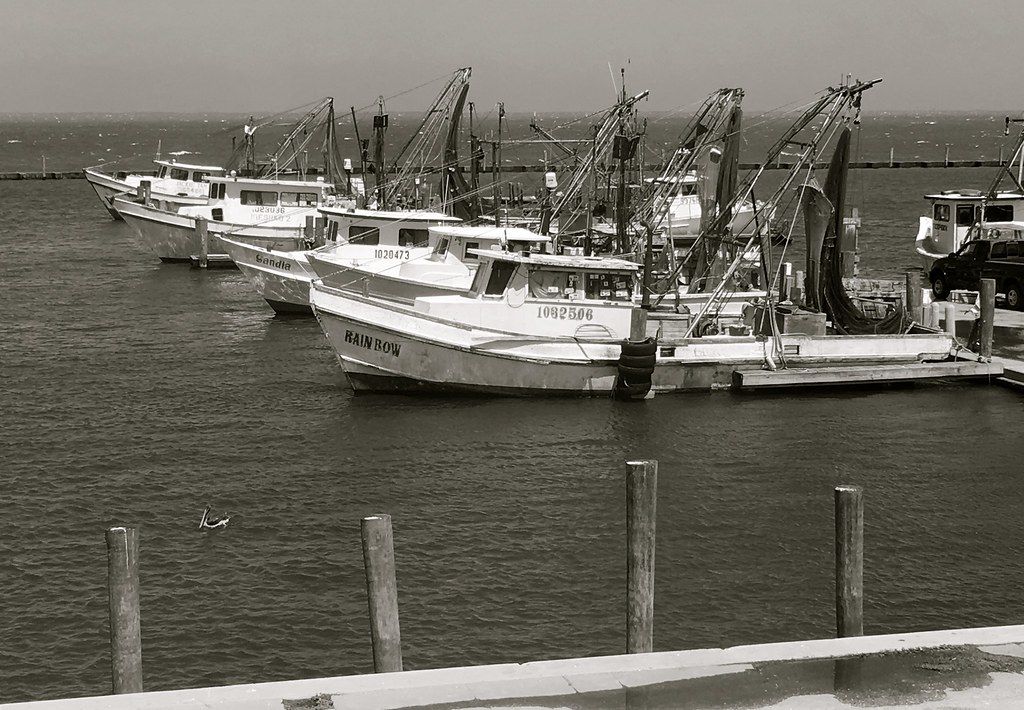
Fulton's harbour is one of the places where the season shows. The shrimp boats tie up there in rows, their outriggers raised, and the fishing piers and the waterfront path fill with walkers and anglers. Winter is also the main oyster season in the bays, when the commercial boats work the reefs; seasons and closures change from year to year. The story of the bay fisheries in oysters and shrimp covers what the boats are after.
Watching the boats come and go is a pastime in itself, and the pelicans waiting on the pilings for scraps are as much a part of the scene as the boats.
Festivals and the end of the season
Winter on the coast has a gentle rhythm of events. There are craft fairs, art shows, birding talks and holiday lights in December. The best known date in the calendar comes near the end of the season: Fulton's Oysterfest, held in early spring, which brings music, food and crowds to the harbour.
By March and April, trucks start hitching up again. The cranes lift off for Canada, the spring migrants arrive, and the Winter Texans head north for the summer. The towns go quiet for a few weeks once more before the summer families arrive.
Visiting in winter yourself
Even if you are not staying for months, the winter season is a good time to come. The weather is usually mild and dry, the beaches are almost empty on weekdays, and the birding is at its best. Prices for some things are lower than in summer, though popular places can fill up when the Winter Texans are in town, so plan ahead.
Bring layers. A norther can drop the temperature sharply in a few hours, with a raw wind off the bay, and then a few days later the sun returns. Take binoculars, a light rain jacket and comfortable shoes for the harbour walk, and you will fit right in with the people who have been doing this for years.
Picture credits: roy.luck – Creative Commons BY 2.0.