
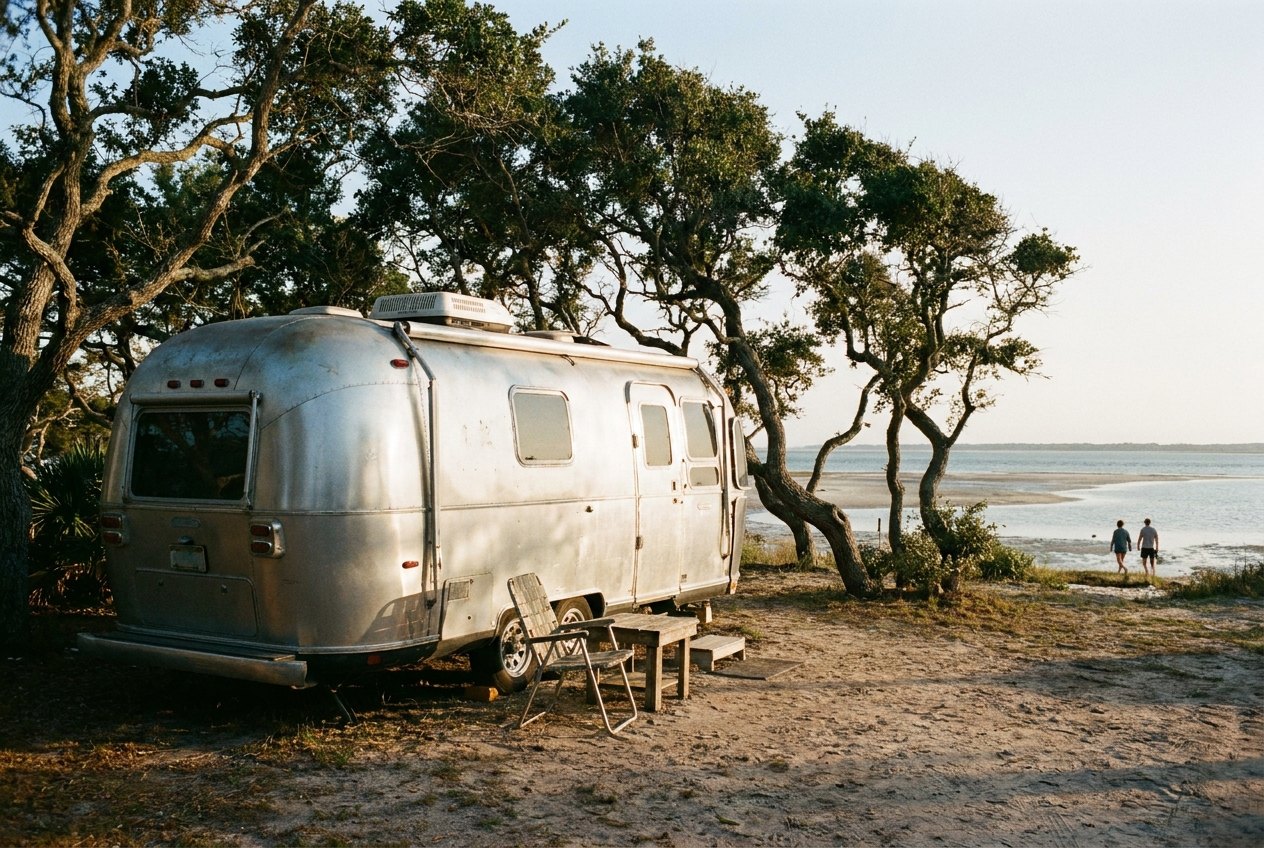
Camping on the Coastal Bend means choosing between two kinds of place. There are the sheltered bay shores, with gnarled live oaks and calm water, and there are the open Gulf beaches, where you camp on the sand within sound of the surf. Both are good, and both have their quirks. The wind blows most days, the sun is strong, the mosquitoes can be fierce, and the tide comes closer than you think.
The state parks are the backbone of camping here. They are well run, reasonably priced and set in some of the best spots on the coast. This guide covers how they work, what beach camping involves, and how to make a night by the water comfortable.
The state parks
Several state parks lie within easy reach of Rockport. Goose Island State Park, just north of town on the edge of the bays, has campsites under the oaks and sites along the water, with views out over the shallows and the islands. It is a fine place for birding and fishing, and the Big Tree, a huge old live oak, stands close by.
Mustang Island State Park, south of Port Aransas, has sites right behind the beach as well as primitive camping on the sand. It is one of the best places on the coast to fall asleep to the sound of waves. Further south, Padre Island National Seashore has a developed campground near Malaquite Beach and long stretches of primitive beach camping, while inland, Goliad State Park and Lake Corpus Christi State Park offer shade and calm when the coast is too windy.
Most state park sites have water, many have electricity, and some have full hookups. There are restrooms with showers, and dump stations for trailers and motorhomes. Sites can be reserved through the Texas state parks reservation system, and popular parks fill up on holiday weekends, in spring break and through the Winter Texan season. Fees and rules get revised, so look them up the week you travel.
Camping on the beach
Primitive camping is allowed on many stretches of Gulf beach along the coast, but the rules differ from place to place. On some beaches you need a permit, on others a parking sticker, and some areas are closed to vehicles or overnight stays at certain times of year, especially during turtle nesting. There are usually limits on how long you can stay in one spot.
Down the road · IslandsPadre Island National Seashore and the sea turtlesWherever you pitch, stay well above the high-tide line, off the dunes and away from the vegetation. Bring all your water and take all your rubbish with you. Fires may be allowed on the open sand in some places but are often banned in dry weather; keep any fire small and well away from the dunes. At Padre Island, the park staff can tell you where beach camping is open and what the conditions are like.
Living with the wind
The wind is the defining fact of camping on this coast. Most days there is a steady breeze off the Gulf, and in spring it can blow hard for days on end. In winter, northers bring sudden shifts, often in the night, with gusts strong enough to flatten a poorly pitched tent.
Use long sand stakes or screw-in anchors, and guy everything out. Pitch with the narrow end into the wind, and keep low. A windbreak helps with cooking and sitting outside. For trailers and motorhomes, choose a site that lets you park nose into the wind, and keep awnings rolled up unless you are sitting right beside them.
Mosquitoes, heat and sand
Mosquitoes on the Coastal Bend can be bad, especially after rain and on still evenings near marshes. Bring repellent, nets and long, light clothes for the evening. A breeze keeps them down, which is one reason many people choose beach sites over sheltered ones in summer.
Summer heat is intense, and humid nights do not cool down much. If you camp between June and September, look for shade and avoid strenuous activity in the middle of the day. Spring and autumn are much kinder.
Sand gets into everything. A mat at the door of the tent or trailer, a brush and a sealed box for food go a long way.
Storms and safety
From June to November, check the forecast for tropical storms before you go and keep checking while you are there. Parks close and evacuate when storms threaten, and the barrier islands are the first places to be cleared. The notes on hurricane season and Gulf weather cover what to watch.
Thunderstorms can build quickly in summer, with lightning over open water and beaches. When you hear thunder, head for a vehicle or a solid building. Keep an eye out for rip currents if you swim from a beach campsite, and keep children close at the water's edge.
Choosing your spot
For a first trip, a state park site is the easy choice, with water, power and showers close by. Goose Island suits birders and anyone who likes shade and calm water; Mustang Island suits those who want the surf at the door. Once you know the coast better, a night on a remote beach under the stars is one of the great experiences of the Coastal Bend. The roads and causeways that link them all are part of the pleasure of moving between them.