
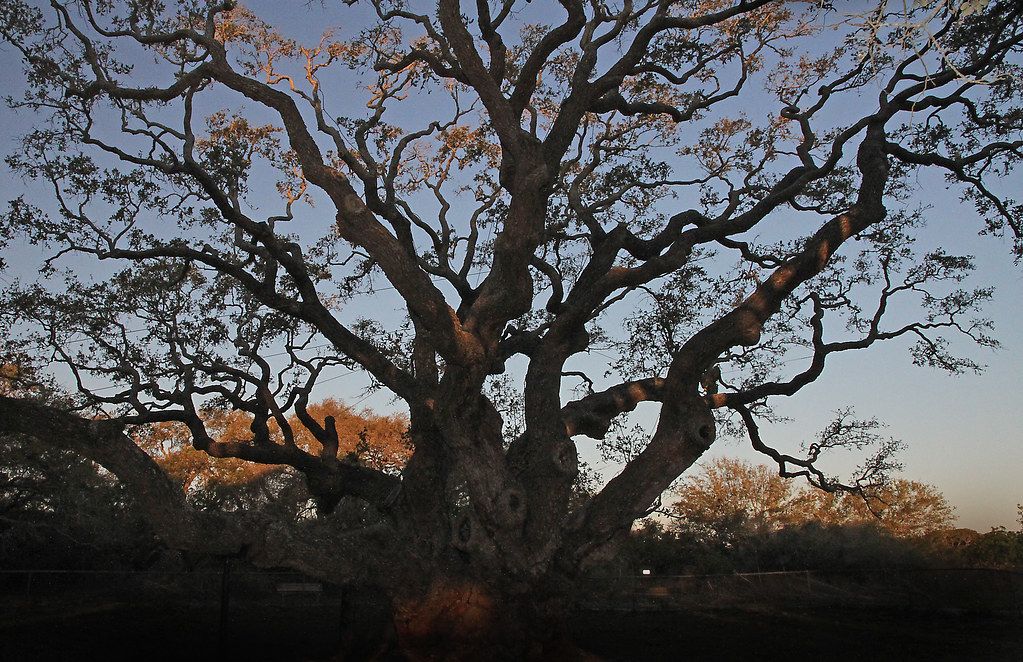
Cross the Copano Bay causeway north of Fulton and the road comes down onto the Lamar Peninsula, a quiet spread of oak mottes, marsh and scattered houses. At its southern tip, where St Charles Bay opens into Aransas Bay, lies Goose Island State Park. And a short drive inland from the shore stands the reason many people come: a coastal live oak so old, so wide and so twisted that it has become known simply as the Big Tree.
It is an easy half-day from Rockport, and it pairs naturally with the causeway, the bayfront and, in winter, the whooping cranes that feed in the marshes nearby.
The Big Tree
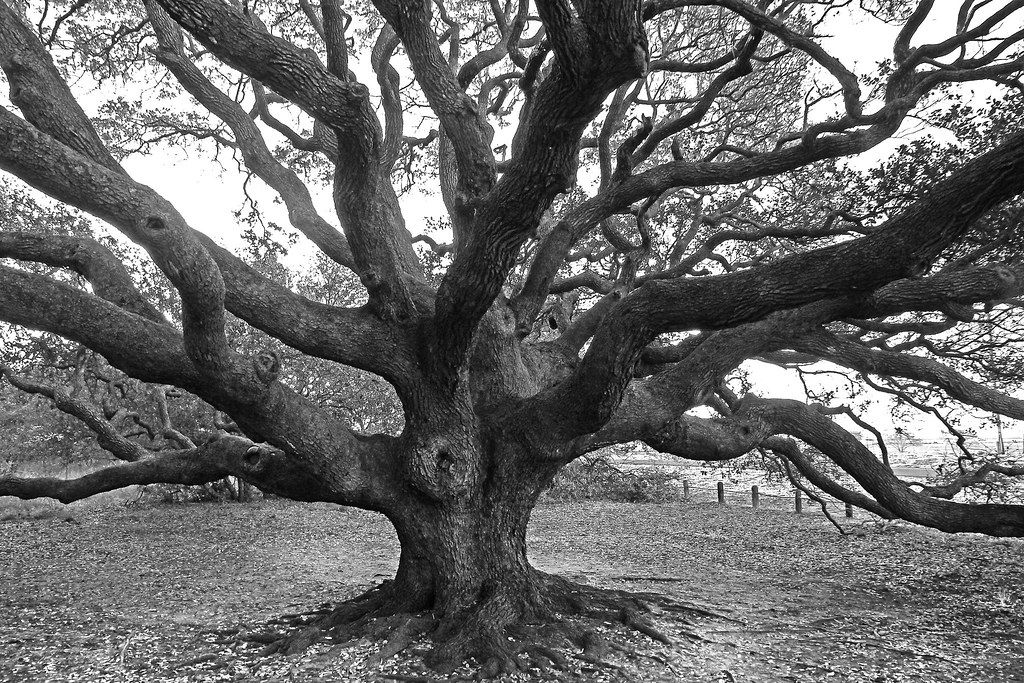
The Big Tree is a coastal live oak, a species that grows low and wide on the Texas coast, bending away from the wind rather than reaching for the sky. This one is often said to be a thousand years old or more, though no one can say exactly. Its trunk is enormous, its limbs spread in great crooked arms, and some of them sweep down almost to the ground before rising again.
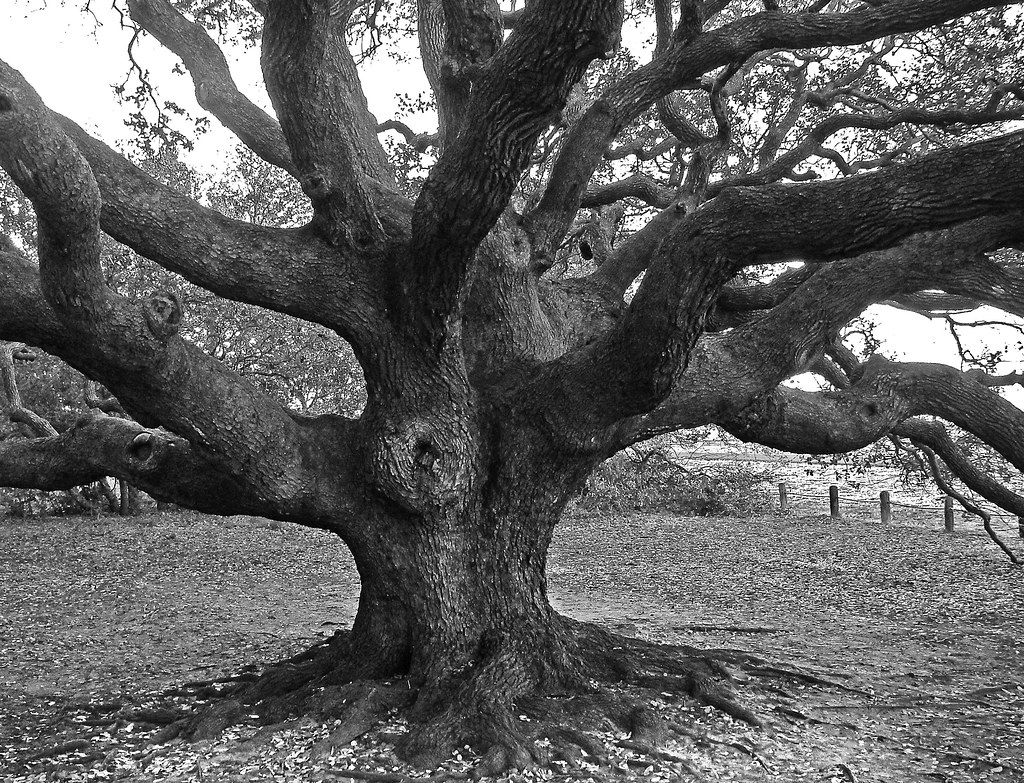
It has survived a long list of hurricanes, droughts and freezes, including Hurricane Harvey in 2017, which stripped the leaves from oaks across the Coastal Bend. The story of that storm is told in the guide to Rockport after Hurricane Harvey. The Big Tree lost limbs over the years but kept growing, and it is now fenced to protect its roots from trampling.
Stand back from the fence and walk slowly around it. The shape changes with every step, and the light through the branches shifts through the day. Early morning and late afternoon are the best times, when the sun is low and the bark shows its deep grooves.
The state park
Goose Island State Park covers a strip of land along the bayfront and a wooded section inland, among the oaks. The bayfront area is open and windy, with views across the water and a long fishing pier reaching out over the shallows. The wooded area is shaded and quieter, with trails and picnic spots under the trees.
Entry is by a daily fee per person, and state park passes cover it. The park can fill on holiday weekends. Reservations may be needed at busy times, even for day visits.
Down the road · Bays and birdsThe whooping cranes of Aransas, tall and white against the marshThe park has a long history as a fishing and camping spot. Bayfront campsites sit almost on the water, with nothing between you and the sunrise but the bay. Wooded campsites are more sheltered. Both fill quickly in winter, when visitors from the north settle in for weeks or months at a time.
Fishing the pier and the flats
The fishing pier at Goose Island is a favourite with local anglers. Redfish, speckled trout, black drum and flounder are the usual targets, and the shallow flats around the pier are good for wade fishing. A Texas fishing licence is required.
At dawn, the pier is often lined with people casting quietly into the grey light. Pelicans perch on the railings, and terns plunge into the water around them. Even if you do not fish, a walk to the end of the pier is a fine way to start a day.
St Charles Bay and the birds
St Charles Bay runs north from the park, a long, shallow arm of water between the Lamar Peninsula and the Blackjack Peninsula. Across it lies Aransas National Wildlife Refuge, and in winter whooping cranes sometimes feed in the marshes on the Lamar side too. The guide to whooping cranes at Aransas National Wildlife Refuge covers where and when to look.
The bayfront at Goose Island is a good place for shorebirds and waders. Herons, egrets, roseate spoonbills and ibis feed on the flats, and in winter, ducks and grebes float out on the open bay. In spring and autumn, songbirds pass through the oak woods on migration. Bring binoculars, and allow time to sit and watch.
Heat, wind and bugs
Summer on the Lamar Peninsula is hot and humid, with little relief in the shade on still days. Mosquitoes and biting flies can be fierce in the oak woods, especially after rain. Bring repellent, light long sleeves and plenty of water.
Winter is milder, but north winds can bring sudden cold snaps. The bayfront is exposed, and a strong wind makes it feel much colder than the thermometer suggests. Pack layers and a windproof jacket.
In storm season, from June to November, follow official forecasts. The park may close ahead of severe weather, and low roads on the peninsula flood quickly when water is pushed into the bays.
Pier, oak and picnic
A good day starts early at the pier, moves to the Big Tree as the sun climbs, and ends with a picnic under the oaks. On the way back, stop at the Copano Bay causeway for the sunset, as described in the guide to Copano Bay and the old causeway pier. In winter, add a long morning at the wildlife refuge and you have one of the best days the Coastal Bend can offer.
The Big Tree is not grand in the way of redwoods or cathedrals. It is grand in the way of something that has simply endured: low, scarred, stubborn and still green after centuries of Gulf weather.
Picture credits: Sloalan – CC0 1.0 Universal; Sloalan – CC0 1.0 Universal; Sloalan – CC0 1.0 Universal.