
Rockport is famous among birders, and much of that fame goes back to one woman. Connie Hagar moved to the town in the 1930s and spent the rest of her life watching birds there, almost every day, for decades. She kept careful notes of what she saw, when and where, and those records changed how people understood the birds of the Texas coast.
Today, two small sanctuaries in Rockport carry her name, and the town hosts birders from across the country every spring and autumn. This story covers her legacy, the sanctuaries, and the great seasons of migration that bring so many birds through town.
The birder of Rockport
Connie Hagar came to Rockport with her husband, and she soon found that the town lay on one of the great migration routes of North America. Birds moving north in spring and south in autumn funnel along the Texas coast, and Rockport, on its point between the bays, is a natural stopping place.
She watched systematically, following set routes around town and along the shore, recording numbers and species with great care. Some of her early reports, of birds rarely recorded in Texas, were doubted by experts at first. Visiting ornithologists came to see for themselves and found her records accurate, and her work drew national attention to Rockport as a birding destination.
She never sought fame, and she never left Rockport for long. Her notes formed one of the most detailed long-term records of birds in any place on the coast, and her name is still spoken with respect among birders here.
The sanctuaries in town
Two small sanctuaries in Rockport carry her name. One, near Little Bay, protects a stretch of shoreline, wetland and open water where wading birds, ducks and shorebirds gather. The other, in town, preserves a patch of woods and gardens near where she lived, kept as a refuge for songbirds.
Both are small, quiet and easy to visit. Paths and viewing spots let you watch without disturbing the birds, and in season you may find yourself beside birders who have travelled a long way for the same view.
The shoreline of Little Bay itself is worth walking too. The guide to Rockport's harbour, beach and art galleries covers the boardwalk and the paths along the water.
Down the road · Bays and birdsThe whooping cranes of Aransas, tall and white against the marshSpring migration and fallouts
Spring migration on the Texas coast runs from March to May, with the peak in April and early May. Millions of songbirds, including warblers, tanagers, orioles, buntings and thrushes, cross the Gulf of Mexico from Central and South America, flying through the night over open water.
On a normal day, most of them continue inland without stopping. But when a north wind or a band of storms meets them over the Gulf, they arrive exhausted and land at the first trees they find. This is called a fallout, and on the right day the oaks and gardens of Rockport can fill with bright, tired birds, feeding and resting before moving on.
Fallouts cannot be planned for. The best you can do is watch the weather, and if a front passes through during migration season, get out early the next morning. Look in any patch of trees near the water, especially oak mottes, gardens and the sanctuaries.
Even without a fallout, a spring morning in Rockport rewards patience. Stand quietly near a flowering tree or a dripping hose and let the birds come to you. Many migrants feed low and close, too tired to be shy, and a single oak can hold a dozen species in an hour. Note the time, the weather and what you saw, and you are birding in the tradition this town is known for.
The autumn hummingbird season
Autumn brings a different spectacle. In late summer and September, ruby-throated hummingbirds gather on the Texas coast before crossing the Gulf on their way south. For a few weeks, gardens and feeders in Rockport and Fulton can be thick with them, buzzing and chasing in every direction.
The towns celebrate this season with a hummingbird festival each September, with talks, garden tours and bird walks.
If you have a garden or a feeder near the coast, autumn is the time to keep it full. If you are visiting, any patch of flowering shrubs is worth watching, especially in the early morning and late afternoon.
Birds of the bays
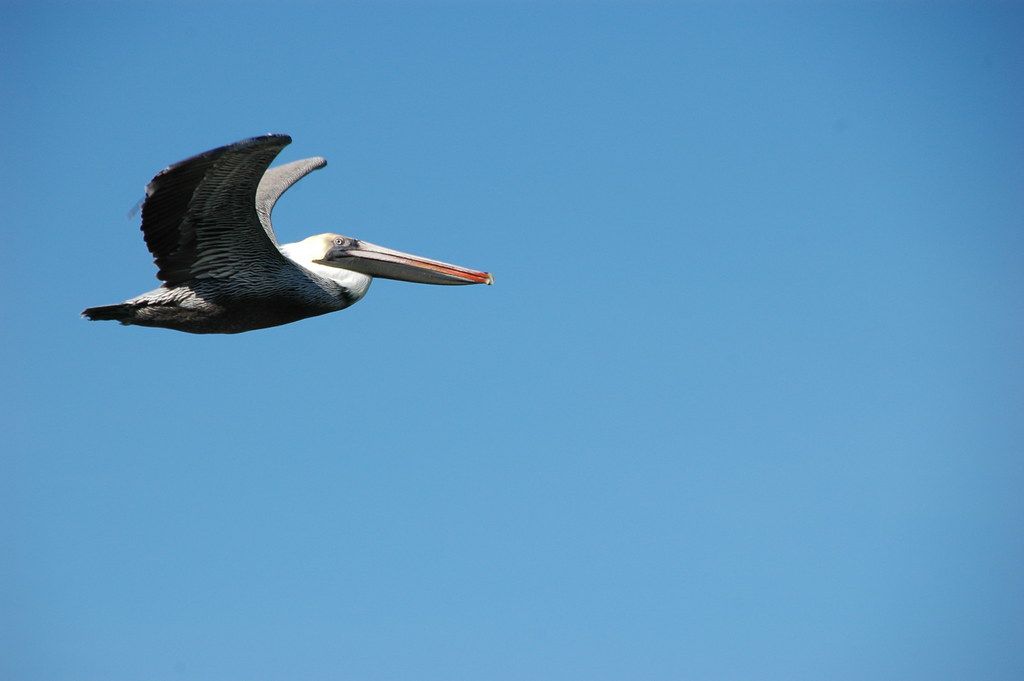
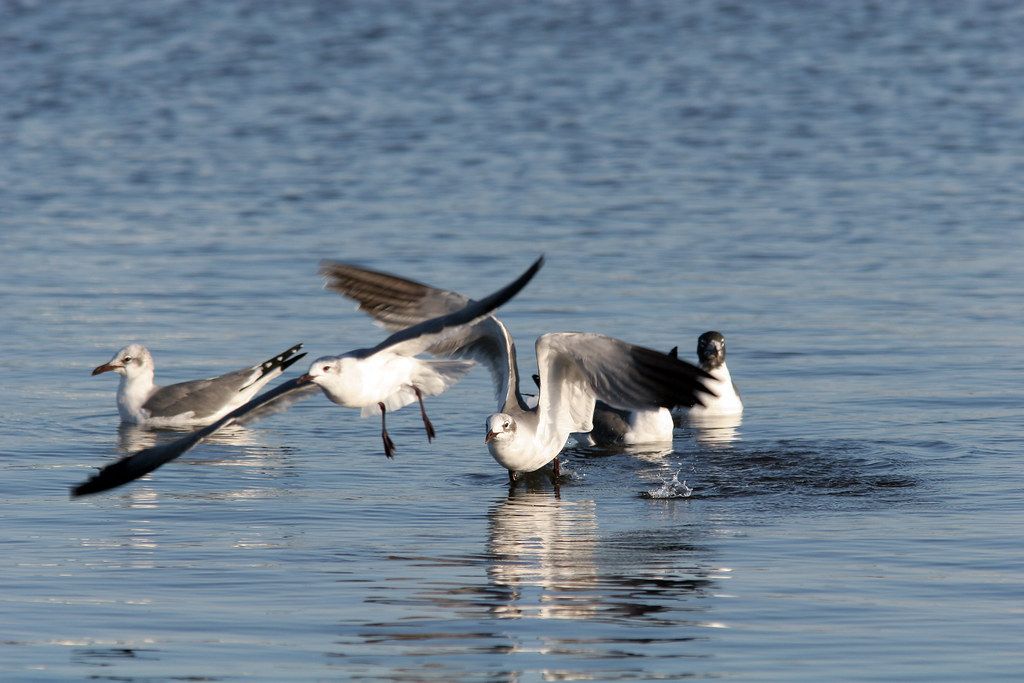
Not every bird here is a migrant. Brown pelicans, laughing gulls, herons, egrets and terns live along the bays all year. Pelicans glide low over the water in long lines, and gulls squabble on piers and beaches. In winter, ducks, shorebirds and whooping cranes join them, as the guide to whooping cranes at Aransas National Wildlife Refuge describes.
The brown pelican is a symbol of recovery on this coast. It once declined badly because of pesticides that weakened its eggshells, and its return to the Texas bays is one of the conservation successes of the last century. Watch for it diving headfirst into the water after fish.
Birding sensibly
- Bring binoculars and a field guide; a notebook helps if you want to follow Connie Hagar's example.
- Go early. Birds are most active at dawn, and the heat builds quickly.
- Respect private property; many good birding spots are in people's gardens.
- Keep your distance from nesting and roosting birds.
- Carry water and sunscreen, and watch for fire ants in grassy areas.
For more birding on the Coastal Bend, the guides to Goose Island and the Big Tree and the boardwalk in Port Aransas cover other good places to watch.
Picture credits: Woody H1 – Creative Commons BY 2.0; jiwasz – Creative Commons BY 2.0.