
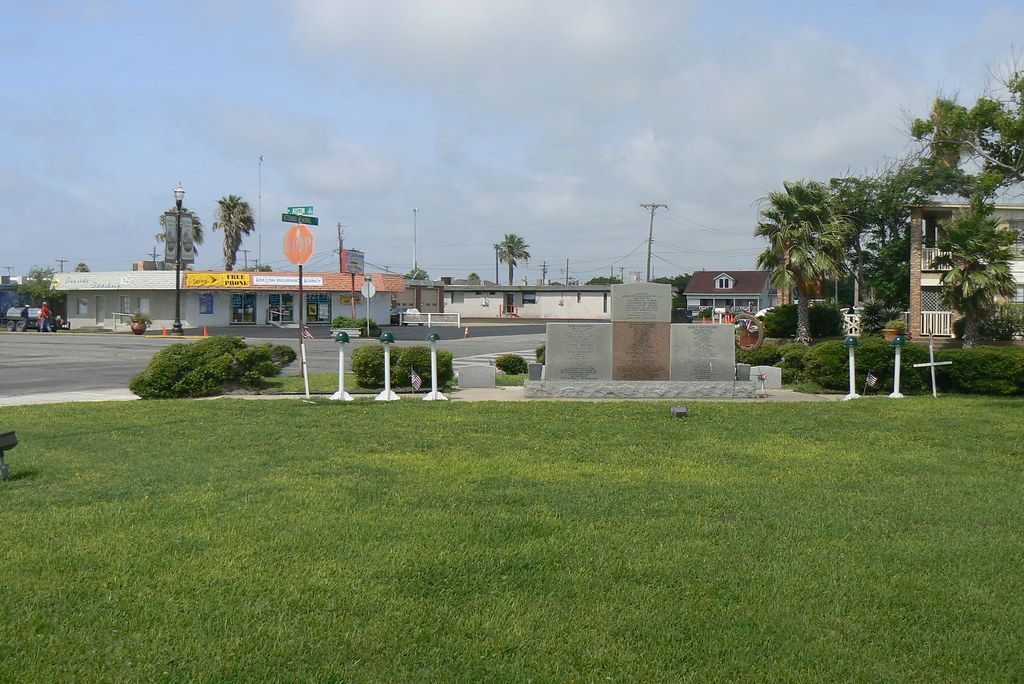
Rockport sits on a low point of land between Aransas Bay and the smaller, rounder Little Bay, and almost everything worth an afternoon here lies within sight of water. The town is not a resort in the loud sense. It is a place of shrimp boats and pelicans, of galleries in old cottages, of a beach where children wade out a long way before the water reaches their waists. You can see most of it in a day, but it is better taken in pieces over several.
Start with a simple picture of the layout. The harbour lies at the heart of town, with the beach park on a spit of land just beyond it. Downtown, a few blocks of Austin Street and the streets around it hold most of the galleries. To the north, Little Bay curves in behind the town, edged by a path and lined with houses, and further on, Fulton runs along the bayfront toward the causeway.
Rockport Beach Park
The beach is on the bay, not the open Gulf, and that changes everything about it. There are no breaking waves to speak of. The sand slopes gently, the water stays shallow far out, and on a still morning it lies flat and pale green. Families come for exactly that reason, and so do people who simply want to sit in a folding chair with a book and watch terns working the shallows.
The park stretches along a narrow strip with pavilions, a fishing pier and a saltwater pond at one end. Part of the shoreline is kept for birds, and in the cooler months you can watch skimmers, terns and gulls resting on the sand within easy binocular range. Entry has at times carried a vehicle fee, especially in the warm season.
Afternoon wind is the thing to plan around. In spring and summer a steady southeasterly often builds after lunch, roughing up the water and turning it cloudy. Mornings are calmer, cooler and kinder for swimming. Shade is limited beyond the pavilions, and the Texas sun on a bay beach feels hotter than the thermometer suggests.
The harbour and its boats
Rockport Harbor is a working place first. Shrimp boats tie up with their outriggers folded like the wings of resting birds, and the morning brings the smell of diesel, salt and ice. Pleasure boats share the basin, and fishing skiffs come and go from the ramps. Walking the edge of the harbour costs nothing and gives you a better sense of the town than any brochure.
Some boats sell their catch straight from the dock when the season allows, usually advertised with a hand-lettered board rather than a shopfront. If you want to buy, bring a cooler with ice and come early. The story of what comes off those boats, and when, is told more fully in the guide to oysters, shrimp and the bay seafood season.
The harbour also carries the memory of 2017. When Hurricane Harvey came ashore near Rockport that August, marinas along this shore took a heavy blow, and boats were thrown against one another and against their own docks.
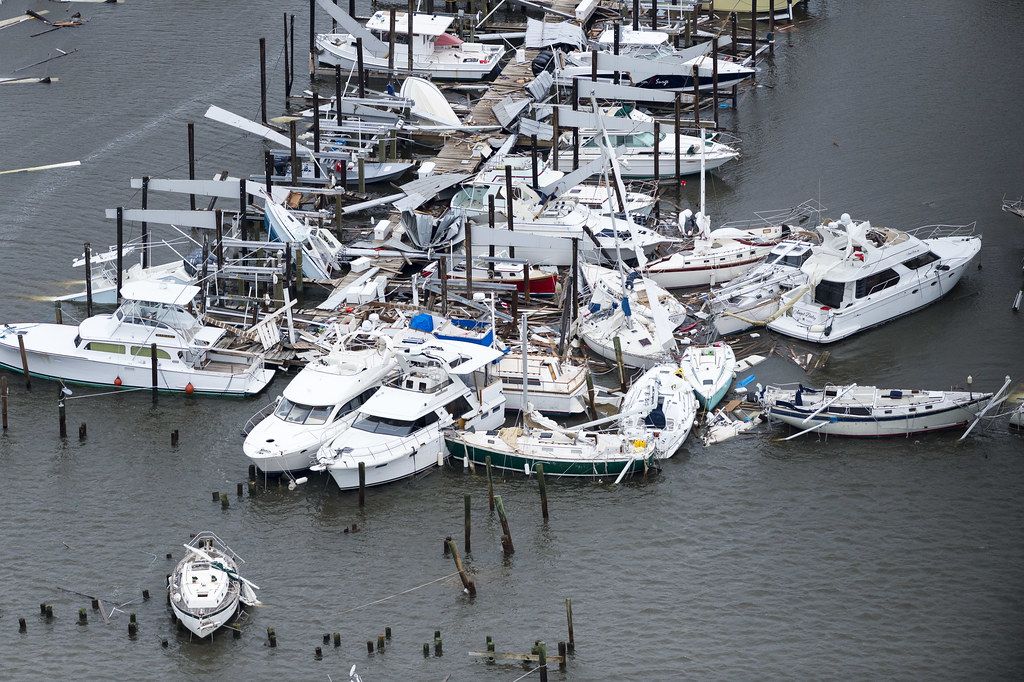
Much of what you see today was rebuilt in the years that followed. If the recovery interests you, the story of Rockport after Hurricane Harvey tells it plainly.
Down the road · Rockport-FultonThe Fulton Mansion and the bay it was built to facePainters, galleries and the art centre
Rockport has drawn painters for generations, partly for the light, which comes in low and clear across the bays on winter mornings, and partly for the subjects: wind-bent oaks, weathered boats and herons standing in the shallows. The town grew a reputation as an artists' colony, and that reputation still shapes the downtown streets.
The Rockport Center for the Arts is the anchor, a public art centre with changing exhibitions, a sculpture garden and classes. Around it, small galleries occupy old houses and storefronts, showing everything from careful seascapes to bright folk paintings of shrimp boats. Hours in the smaller galleries vary with the season and the owner's plans, so the best approach is to wander on a weekday morning and take what is open.
The Texas Maritime Museum, near the harbour, is worth an hour if the boats have caught your interest. It covers the long story of the Texas coast and its working craft, from early sailing ships to the offshore oil industry, and it makes sense of much of what you see moored outside.
Little Bay and the boardwalk
Little Bay is the quieter side of Rockport. A shoreline path and a boardwalk run along parts of its edge, and the water here is often calm when Aransas Bay is choppy. Herons and egrets fish along the margins, and in winter you may see ducks rafted out in the middle.
Little Bay is the quieter side of Rockport.
The houses around Little Bay are a quiet lesson in coastal building. Many stand raised on pilings, some with storm shutters folded back, others newly built to stricter rules after recent storms. Old live oaks lean inland in the yards, shaped over decades by the prevailing wind off the water, and their crowns tell you at a glance which way the weather usually comes from.
An early walk here is one of the simplest pleasures in town. Bring binoculars and go slowly. Spring and autumn bring passing songbirds into the trees and gardens near the water, and Rockport's birding history runs deep, a subject picked up in the guide to spring migration and the Connie Hagar sanctuaries.
Shaping your day
A good Rockport day starts at the harbour soon after sunrise, when the boats are busy and the air is cool. Move to Little Bay for a walk while the wind is still down, then spend the middle of the day indoors among paintings or in the museum. Late afternoon belongs to the beach park, when the light lengthens and the sand cools.
- Most public places are free to wander, but parks and museums may charge entry.
- Summer heat is serious. Carry water, plan shade and keep the hottest hours for indoor visits.
- Jellyfish drift into the bay in some summers. Watch for them along the waterline.
- In storm season, from June to November, follow official forecasts and any local orders.
From October to May the town is at its best: mild air, clear light and winter birds. If you have a few days, add the drive north across the causeway to Goose Island and its ancient oak, or the long morning trip to see whooping cranes at Aransas in winter.
Picture credits: qnr – Creative Commons BY-SA 2.0; U.S. Department of Defense Current Photos – public domain.