
Drive north from Rockport along Fulton Beach Road and the houses thin out, the oaks lean harder, and the bay opens to your right. Then a tall, pale house with a steep mansard roof appears across a lawn, looking oddly formal for a shore of fishing piers and pelicans. That is the Fulton Mansion, built in the 1870s and now kept as a state historic site.
It is a short visit, an hour or two, but it explains a great deal about how this stretch of coast came to be settled, and it pairs naturally with a slow walk along the water it was built to overlook.
George Fulton and the cattle years
George Ware Fulton came to Texas as a young man and went on to become an engineer, a businessman and, through the cattle trade, a wealthy one. After the Civil War, ranching on the coastal prairies boomed, and Fulton was among those who built fortunes on cattle, hides and land. The small town that grew along this shore carries his name.
With his wife, Harriet, he chose a site on the bayfront for a family home and spent several years building it in the mid-1870s. The result was meant to be modern, comfortable and solid enough to stand up to the coast, and its design reflected Fulton's engineering mind as much as his taste.
A house ahead of its time
The mansion is built in the French Second Empire style, with the steep roof and decorative trim that were fashionable at the time. What set it apart, though, was inside. The house had gas lighting, a system for running water, and heating, features that were rare in rural Texas in the 1870s and remain the part of the story that most visitors remember.
The walls were built thick and the frame strong, a sensible choice on a shore that knows storms. Over the following century the house passed through other hands and fell into disrepair before the state took it on and restored it. The work has continued since, including repairs after the hurricanes that have crossed this coast.
Guided tours lead you through the rooms, which are furnished to suggest how the family lived.
Down the road · Bays and birdsGoose Island and the oak that has outlasted every stormThe bay outside the door
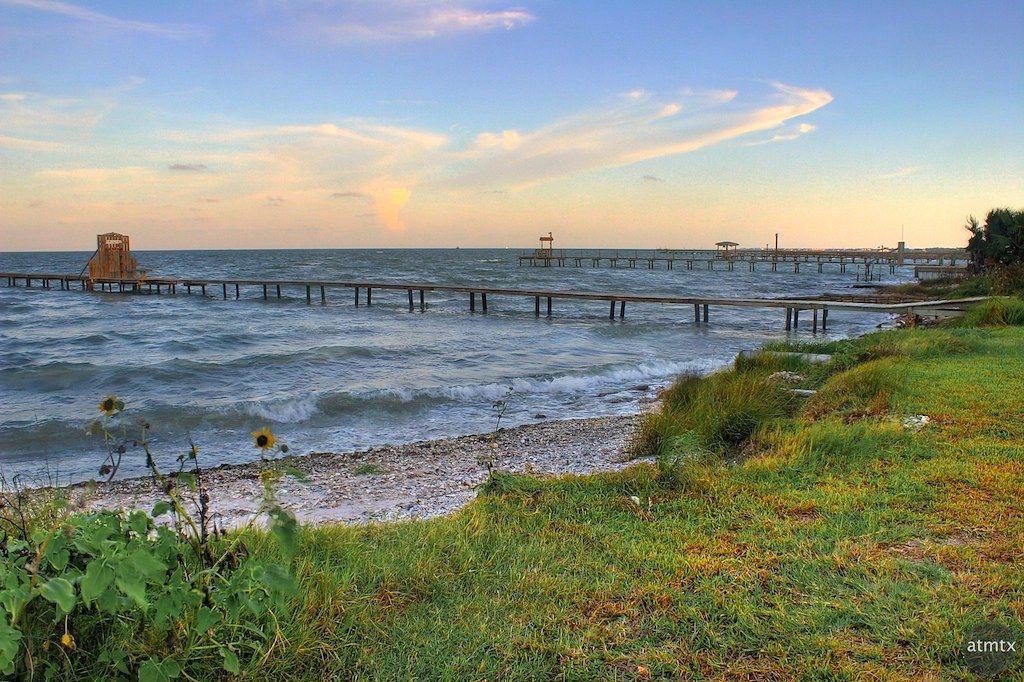
Step back outside and turn around. The view the Fultons built for is still there: a wide sweep of Aransas Bay, a line of low grass and wildflowers along the shore, and wooden piers running out over the water. On a clear evening the sky turns pink and gold above the far shoreline, and the piers stand out in dark silhouette.
The shoreline here is a good place for an easy walk. Herons fish the shallows, brown pelicans cruise low over the water and gulls squabble on the pier rails. In winter the light is clear and low, and the bay often looks flatter and bluer than in the hazy months of summer.
A strong wind changes the mood quickly. When the southeasterly is up, waves slap against the bulkheads and the water turns brown with stirred sediment. Calm mornings are the time for photographs and for watching birds along the water's edge.
Fulton today
Fulton is small and spread thin along the bay, more a stretch of shoreline than a town centre. Fishing piers, a harbour and houses on stilts line the road, with old live oaks bent inland by the prevailing wind. You can drive its length in a few minutes, but walking or cycling a section of the bayfront shows you far more.
The Fulton harbour is a working basin where fishing boats and pleasure craft tie up side by side. Winter boat trips out to see whooping cranes leave from harbours along this shore, and the guide to whooping cranes at Aransas National Wildlife Refuge covers what to expect from them in general terms.
From Fulton, the road continues north to the Copano Bay causeway, and beyond it to Goose Island State Park and the great live oak known as the Big Tree. Heading south instead brings you back to Rockport's harbour, beach park and galleries, described in the guide to Rockport's harbour, beach and art galleries.
An hour inside, an hour on the bayfront
- Allow an hour for the house and another for the bayfront.
- The mansion has a visitor centre with exhibits; tours fill on busy days, so arrive early.
- Summer afternoons are hot and humid, and the lawns offer little shade.
- Wear shoes you can manage stairs in; the house has several levels.
- In storm season, follow official forecasts; historic sites may close ahead of severe weather.
The cooler months suit the visit best. From October to April the air is mild, the bay is often calm in the early part of the day, and the winter birds give the shoreline more life. Pair the house with the drive north across Copano Bay, described in the guide to Copano Bay and the old causeway pier, and you have a full, unhurried day.
Why it matters here
The Fulton Mansion is the clearest surviving sign of the cattle era that shaped the Coastal Bend. Before the fishing towns, the art colony and the winter visitors, this shore was ranch country, and the money from it built houses like this one. Standing on the lawn, with the bay in front and the road behind, you can see both chapters at once.
Picture credits: atmtx – Creative Commons BY-SA 2.0.