
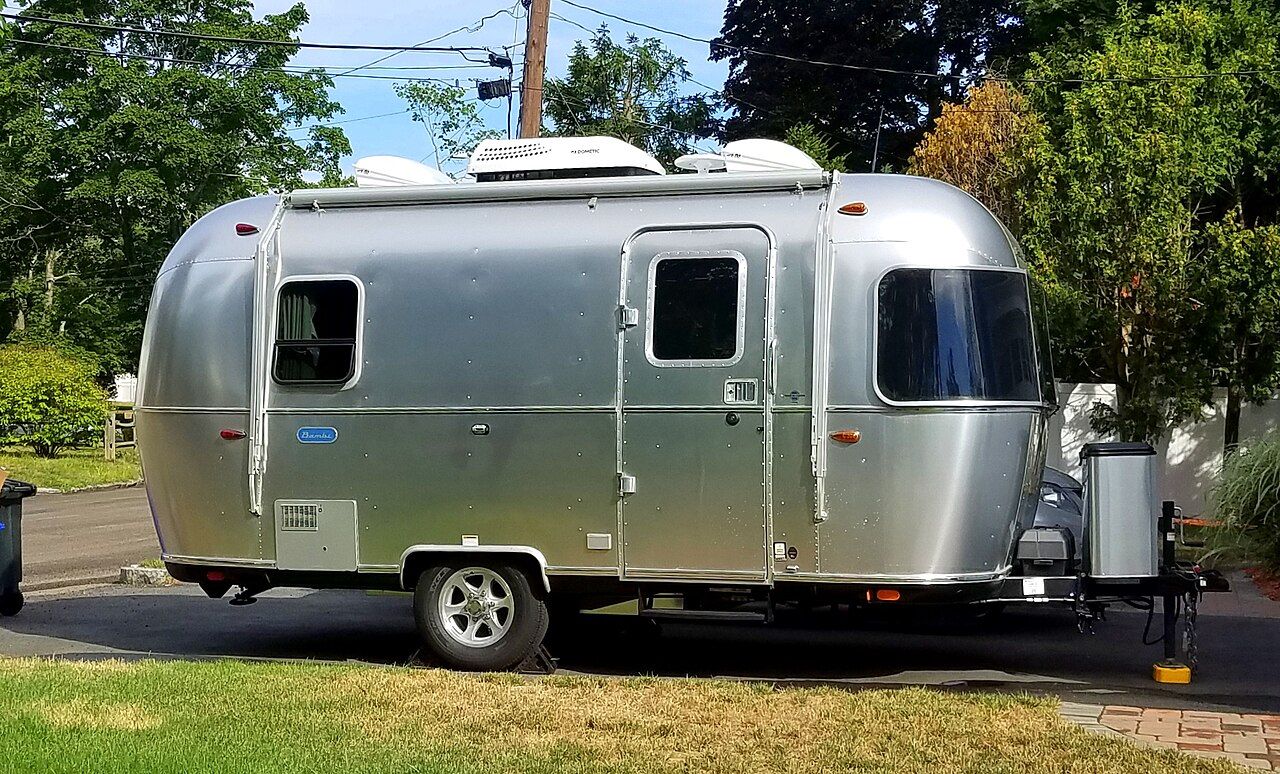
On the Texas coast in winter, you see them everywhere: long, rounded, polished trailers that catch the low sun like mirrors. The Airstream is one of the few objects of American industrial design that has kept its basic shape for almost a century, and the older ones have become something close to rolling sculpture. Their story is one of aircraft engineering, postwar wanderlust and a stubborn idea about what travel should feel like.
From plywood to aluminium
Travel trailers in the 1920s were mostly boxes. Built from wood on a steel chassis, they were heavy, square and caught the wind like sails, which made them hard work to tow behind the cars of the day. Wally Byam, a Los Angeles publisher and tinkerer, began building and selling plans for lighter teardrop and canvas-topped trailers at the end of that decade. His great step came in the mid-1930s, when he took over the designs of an aircraft engineer, William Hawley Bowlus, whose own riveted aluminium trailer borrowed directly from the methods used to build aeroplanes.
In 1936, Byam's company introduced the Airstream Clipper, named after the flying boats then crossing the Pacific. It had a streamlined body of aluminium panels riveted over a light frame, with the outer skin itself carrying much of the load, the way an aircraft fuselage does. It was light for its size, slipped through the air rather than pushing it, and looked like nothing else on the road. It also had features that were luxurious for the time, from electric lights to insulation.
A shape that barely changed
Production stopped during the Second World War, when aluminium went to the war effort. When it resumed, the trailers that came out of the factories kept the same idea. Curved end caps made of segments of aluminium, stretched and riveted into a smooth dome, gave the trailer its bullet profile. A long row of rivets ran along each seam. The windows were set flush or nearly so, and the whole body was mounted low between the wheels.
Over the following decades, models came in many lengths, with names that hint at their era: Flying Cloud, Safari, Globetrotter, Tradewind, Overlander, Sovereign. Shorter versions such as the Bambi, first built around the early 1960s, were popular with couples who wanted something easy to tow. Later trailers grew longer and heavier, picked up wider bodies and more modern fittings, but kept the silver skin and the rounded ends.
The shape had a practical logic. It was aerodynamic, so it towed easily behind a family car. The aluminium did not rot or rust the way wood and steel did. The curved surfaces and riveted seams made a strong, rigid shell. And it looked confident, which mattered as much as anything in postwar America.
Inside, the older trailers were models of careful packing. Curved overhead lockers followed the line of the roof, dinettes folded down into beds, and galleys squeezed a stove, sink and icebox into a few feet of counter. Interior skins of thinner aluminium, often lightly patterned, lined the walls, and early insulation was laid between the inner and outer shells. Small details, such as rounded doors, curved windows and drop-down tables, came from the same habit of mind that built the body: make every piece light, strong and shaped to the space it fills.
Down the road · By trailerWinter Texans: the snowbird season on the coastCaravans and the idea of the road
Byam was a salesman of the idea of travel as much as of trailers. From the early 1950s he led organised caravans of trailer owners on long journeys, first through Mexico and Central America and then much further afield, including a famous run through Africa from one end to the other at the end of the decade. Photographs of long lines of silver trailers crossing deserts and parked beside pyramids and ruins did more to shape the brand's image than any advertisement.
That spirit of travelling together lives on. Owners still gather in rallies of all sizes, and in winter, groups of trailers often move south together in loose company, stopping at state parks and coastal towns. The silver trailers even played a part in the space programme: in 1969, the astronauts returning from the first Moon landing spent their first days back on Earth sealed inside a converted Airstream used as a quarantine unit.
Owners still gather in rallies of all sizes, and in winter, groups of trailers often move south together in loose company, stopping at state parks and coastal towns.
Restoring and living with an old one
Older trailers come up for sale in every condition, from polished show pieces to shells that have sat in a field for decades. Restoring one is a long project. The most common problems are hidden: a plywood floor rotted at the back where water crept in through a leaking seam or window, a steel frame rusted where it met the aluminium, and axles that have lost their spring. Many restorers take the body off the frame entirely, repair or replace the frame and floor, then reseal every seam and rivet.
Inside, the choice is between faithful restoration, with original birch panels, period fittings and the old layout, and a modern rebuild with new wiring, plumbing, insulation and solar panels. Either way, the work is detailed and slow. Outside, the bright mirror finish that people love comes from long hours of machine polishing, and it fades again without care. Some owners prefer the soft, dull sheen of old unpolished aluminium.
Anyone towing an older trailer should have the brakes, bearings, tyres and electrics checked by someone who knows them. Tyres in particular age even when the tread looks fine, and a blow-out on a long highway is the last thing you want.
Why they come to the Texas coast
The Coastal Bend has long drawn trailer travellers in winter. The weather is mild compared with the northern states and Canada, the days are long enough for fishing and birding, and the bays offer a slower pace than the big resort coasts. For decades, retirees known as Winter Texans have hitched up in autumn and come south to spend months near Rockport, Fulton and Port Aransas, and many of them travel in classic silver trailers.
The coast has its own challenges for aluminium. Salt air and spray corrode metal, and the joints where aluminium meets steel are vulnerable to galvanic corrosion. Owners who stay near the water rinse their trailers often, keep seams sealed and watch for white powdery spots on the skin. Strong winds on the causeways are another concern for any high-sided trailer; the notes on getting around the Coastal Bend cover the main routes.
The state parks are where you are most likely to see them gathered. At Goose Island and on the beaches of Mustang Island, a row of old silver trailers under the oaks or facing the Gulf is one of the classic sights of a Coastal Bend winter, and it costs nothing to admire them from the road.
Picture credits: Daderot – CC0 1.0 Universal.